
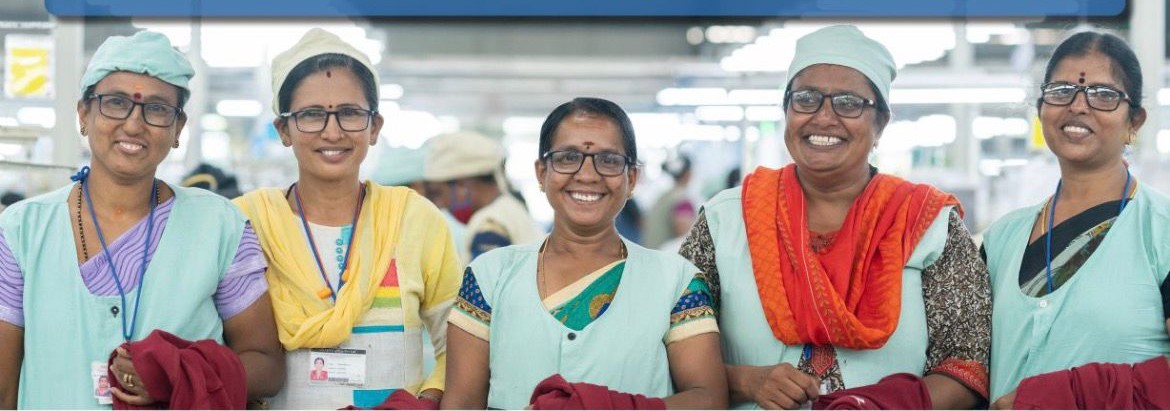
A groundbreaking randomized controlled trial across garment factories in Karnataka, India, demonstrates how simple vision correction can significantly improve worker productivity, economic outcomes, and quality of life.
VisionSpring recently published new research in the British Journal of Ophthalmology highlighting the measurable impact of vision correction among factory workers.
The PROSPER II trial, conducted across three garment factories in Karnataka, India, evaluated the effect of providing eyeglasses to sewing machine operators experiencing uncorrected age-related blurry vision.
The study revealed that nearly 1 in 4 workers had uncorrected near-vision impairment affecting their productivity and day-to-day work performance.
A simple pair of eyeglasses helped improve productivity, workplace efficiency, and overall economic outcomes within just 12 weeks.
The full intervention included vision screening, eyeglass dispensing, and compliance support — all delivered at a cost of less than $10 per worker.
Researchers estimate that scaling vision correction across the global textile and garment workforce could contribute the equivalent of $27 billion in annual industry output while improving worker wellbeing and reducing avoidable productivity loss.
Published in the British Journal of Ophthalmology as part of VisionSpring’s evidence-based workplace vision intervention research initiative.
Evidence-based interventions help demonstrate how accessible eye care can improve productivity, livelihoods, and long-term community wellbeing.
Partner With Us